Streaming
Fake Casino Streamers: The Numbers They Don't Show
9 min read · Updated 2026 · 18+
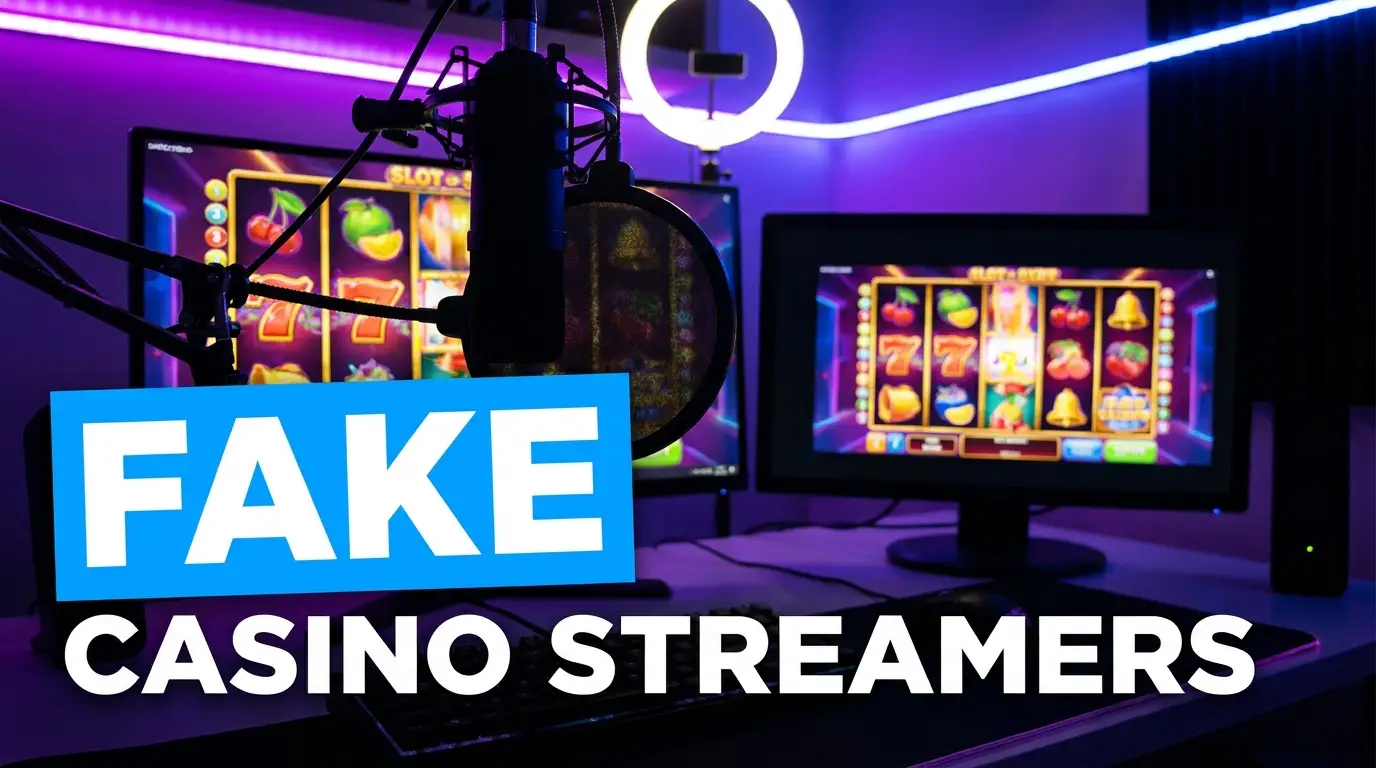
A huge share of casino streaming is played with money that is not the streamer's. Here is how 'fake money' streams work, the math they hide, and how to play with fake money honestly yourself.
Editor's pick
Play with fake money free - claim $25
New players get a $25 bonus to start. Crypto deposits, instant withdrawals, provably fair games. 18+.
🎁 Get $25 Bonus →🌐 VPN friendly — works worldwide
Three kinds of 'fake'
'Fake casino streamer' usually means one of three setups: a sponsor balance funded by the casino, demo/free-play mode with no real value, or staged streams where the numbers are not real bets. All three sell the same illusion - that the streamer's own money is on the line - when the real risk is far smaller.
Sponsor balances
Top streamers are typically paid through affiliate deals, often including a casino-funded balance to gamble with. The wagers on screen are essentially marketing budget; the losses do not hurt the streamer the way they would hurt you, which is why they can chase and max-bet without flinching.
Demo mode and the rigged myth
Demo play - real games, virtual currency - is legitimate and common; the issue is presenting it as real to make wins look frequent. And no, reputable demo slots are not 'rigged to pay more': the RNG and RTP match real mode. The difference you feel is purely psychological.
Spotting the fakes
Look for sponsorship disclaimers, reckless betting with no concern, highlight-only big wins with the losing hours edited out, and affiliate sign-up links. The healthiest frame: treat casino streams as marketing-flavoured entertainment, not evidence of how often anyone wins.
Play with fake money - honestly
You do not need a sponsor deal for the thrill without the risk. Free-play and demo casinos let you spin Plinko, Mines, Dice, Crash, Limbo, roulette and blackjack with virtual currency - no deposit, no risk. It is the genuine version of 'fake money casino', and a perfect reality check when a streamer's staged win makes real gambling look easy.
Bottom line
Fake-money streaming runs from harmless demo to disclosed sponsorships to outright deception, and viewers rarely know which. Keep your scepticism on, and if you want the games, play them with fake money yourself - free, honest, and risk-free.
The survivorship bias that fuels the hype
The most powerful distortion in casino streaming is not deception at all - it is selection. Even a completely honest streamer betting their own money produces a feed that systematically overstates how often people win, because of survivorship bias. Think about what actually reaches you: a highlight clip, an uploaded 'biggest wins' compilation, an algorithm surfacing the moment the multiplier hit. The hours of grinding losses that funded that moment are never packaged and pushed to you, so your mental sample is built almost entirely from winners. Multiply that across an entire genre of streamers all showcasing their best moments and the collective impression is a world where huge wins happen constantly. The reality is the opposite: for every archived jackpot there are thousands of unremarkable losing spins that no one clips. Understanding this one bias inoculates you against most of the harm, because it reframes the highlight as a rare survivor of a losing process, not a representative sample of it.
How sponsorship money distorts behaviour
When a streamer plays with a casino-funded balance or against the backstop of large affiliate revenue, their on-screen decisions stop resembling anything a normal player should copy. Watch closely and the tells are behavioural: max bets placed without hesitation, deep losing sessions chased for hours, and a total absence of the flinch a real bankroll produces. That composure is not skill or bravery - it is the natural result of playing with money that is partly marketing budget, where a five-figure downswing is a business cost rather than a personal loss. The affiliate model deepens the incentive: because many deals pay the streamer a share of the net losses of viewers they refer, the streamer literally profits when the audience loses. That is not a conspiracy, it is just how the business is structured, and it means the person modelling reckless betting for you has an interest in you doing the same. The healthy response is not outrage but calibration: treat the betting behaviour on screen as advertising choreography, never as a strategy template.
The 'rigged demo' myth, debunked
A persistent belief in stream chats is that demo or free-play slots are secretly tuned to pay more, luring players in before real mode tightens up. For reputable, licensed games this is false, and it matters because the myth is used both to hype demo wins and to explain away real-money losses. A certified slot runs the same RNG and the same RTP whether the balance is virtual or real; the regulator tests the game, not two separate versions of it. Any difference you feel between demo and real play is psychological - you bet more freely and remember outcomes differently when nothing is at stake. The one legitimate caveat is provenance: unlicensed clones or sketchy apps can run whatever math they like, which is exactly why you should only ever practise on demos from recognised operators. On a properly licensed game, the demo is an honest rehearsal of the real thing, which is what makes it genuinely useful rather than a bait.
A viewer's checklist for staying grounded
Enjoying casino streams and protecting yourself are not in conflict; it just takes a short mental checklist. Assume every stream is monetised through sponsorship or affiliate links unless clearly proven otherwise, and read any on-screen betting as choreography rather than instruction. Remember survivorship bias every time a clip amazes you - you are seeing a survivor, not the sample. Never size your own bets against a streamer's numbers; their bankroll and their downside are not yours. If you want the games themselves, play them free on a licensed demo, where the math is identical and the risk is zero. And keep the hardest fact in view: the same variance that produces a highlight produces long losing streaks that no one uploads. Watch for entertainment, wager only what you can afford to lose, never chase a stream's feeling with real money, and step away - and seek support - if gambling stops being fun. 18+ only.
The numbers a highlight reel never shows
To see through a casino stream, it helps to reconstruct the numbers the edit removes. A high-variance slot that produces a 2,000x clip typically does so on the back of thousands of losing or break-even spins, because that is how the game's math distributes its return - a small share of enormous outcomes funded by a long tail of small ones. So the single clip you saw represents an outcome that might occur once in many hours of play, presented as if it were a normal Tuesday. Now layer the money on top: at a large bet size, those thousands of grinding spins between highlights represent a substantial sum wagered, and for a sponsored streamer a chunk of that is not personal risk at all. The viewer sees a big win and infers frequent big wins; the reality is a rare event, expensively bought, selectively shown, and partly funded by someone other than the person on screen. Once you train yourself to mentally append the missing spins to every clip - to ask 'how many losing rounds paid for this?' - the genre loses its power to distort your expectations, and you can enjoy the spectacle without mistaking it for a realistic picture of gambling.
Playing it honestly: the demo alternative
The cleanest antidote to fake-money streaming is to do the honest version yourself, because the thing streamers simulate with sponsor balances - the thrill of the games without personal financial ruin - is available for free and without pretence through demo mode. Licensed free-play casinos run the same provably fair originals and the same certified slots on virtual currency, which means you get an accurate feel for Plinko, Mines, Dice, Crash and Limbo with the identical RNG and RTP the real games use. This is genuinely useful in a way a stream is not: instead of watching an edited winner, you experience the real distribution of outcomes first-hand, dry streaks included, which is the single best inoculation against the illusion that big wins come easily. Use it as a reality check the next time a staged or sponsored clip makes real gambling look like easy money - play the same game free for an hour and watch how the variance actually behaves. It is the same games, the same math, and none of the deception, and it costs nothing but time. If you do later choose real stakes, arrive with a budget and the honest expectations demo play gave you. Only wager what you can afford to lose. 18+ only.
Why the format itself misleads
The deepest problem with casino streaming is not the occasional dishonest broadcaster but the structure of the medium, which misleads even when nobody intends it to. A stream is a highlight reel by nature: the big wins get clipped, shared and remembered, while the long grind of losing spins scrolls past or gets edited out. This is survivorship bias operating at scale - the audience sees a curated stream of outcomes weighted toward the spectacular, and unconsciously calibrates its sense of what is normal to a distribution that does not exist. The result is a viewer who believes big wins are far more common and far closer than the fixed house edge could ever allow.
Sponsorship deepens the distortion without any single lie. When a streamer plays on an operator's balance rather than their own money, their risk tolerance detaches from reality - they can chase, bonus-buy and bet at sizes no self-funded player could sustain, precisely because a loss is not really their loss. The audience, not knowing the balance is sponsored, reads that reckless sizing as normal and aspirational. Understanding that the format rewards spectacle and that sponsorship removes real downside lets you watch for entertainment while mentally discounting everything you see. The math on screen is real; the emotional stakes and the representativeness are not. If you want to experience the games without any of that distortion, play the free demo versions, and only ever wager money you can afford to lose. 18+ only.
FAQ
Do casino streamers use fake money?
Often in effect - many play a casino-funded 'sponsor balance' or demo mode, so the on-screen risk is far smaller than it looks.
How do I spot a fake casino streamer?
Watch for sponsorship disclaimers, reckless betting, highlight-only wins and affiliate sign-up links.
Can I play casino games with fake money?
Yes - free-play and demo casinos offer Plinko, Mines, Dice, Crash and more with virtual currency, no deposit and no risk.
Editor's pick
Play with fake money free - claim $25
New players get a $25 bonus to start. Crypto deposits, instant withdrawals, provably fair games. 18+.
🎁 Get $25 Bonus →🌐 VPN friendly — works worldwide